
National Chardonnay Day is May 21st, 2026, and it is the perfect time to explore all that the Chardonnay grape has to offer. Chardonnay is one of the most popular and planted grapes in the world with about 500,000 acres planted worldwide. It has soared in popularity due to its ability to adapt into a wide range of styles that can cater to any taste. You can find bright, fruity, and crisp styles of Chardonnay as well as creamy, oak-aged wines to some of the finest sparkling wines in the world. It is truly a versatile and delicious gem. If you think you don’t like Chardonnay, think again! Try one of the many different variations and let the Chardonnay grape become your newest favorite wine.

Chardonnay Tasting Notes

Different Expressions of Chardonnay
Chablis
Situated in the northernmost Appellation d’origine contrôlée (AOC) of Burgundy is Chablis. Chablis AOC is a cool climate region that only produces Chardonnay grapes. So, if you see a label that says Chablis, you always know it is a Chardonnay wine.

This area is known for producing Chardonnay with more acidity and notes of tart green apple, lemon, and oyster shell notes. One of the unique factors of Chablis is that it is known for being “steely” with a flint-mineral edge to it. These unique notes come from the Kimmeridgian clay soil in the area. It is often unoaked or lightly oaked to really showcase the purity and freshness of the terroir.
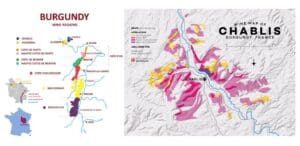
Chablis Map from Wine Folly
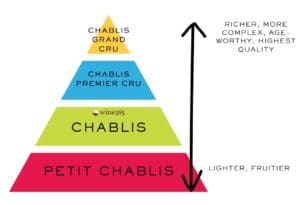
In the Chablis AOC, there are four tiers. With the bottom being Petit Chablis then Chablis then Chablis Premier Cru and lastly the Chablis Grand Cru is on top. Petit Chablis and Chablis will usually be lighter, fruiter wines with little to no oak and no malolactic fermentation. As you move up the pyramid to Chablis Premier Cru and Chablis Grand Cru, the wine becomes richer, more complex, and age-worthy with Chablis Grand Cru being the highest quality.
Wines to try:
Louis Jadot Petit Chablis
A straightforward wine with a very accessible minerality.
Louis Jadot Chablis
The wine is pristine, bright and fresh with high acidity and citrus and mineral aromas and flavors.

Louis Jadot Chablis Premier Cru
Aromas of musk, damp earth, white flowers and melon are followed by a supple texture lifted with subtle acidity. Over the course of the long finish one senses hints of grapefruit and citrus skin which linger on the palate.
Louis Jadot Chablis Grand Cru
Dramatic and bold, this full-bodied white wine has both density and bracing acidity. Aromas of earth and citrus peel are present in the broad, expansive texture while saline notes dominate the long finish.
Buttery Chardonnay (Malolactic Fermentation)
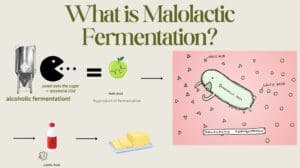
Malolactic fermentation and oak aging are two distinct winemaking processes that both soften and enrich Chardonnay, but they achieve this in very different ways. Malolactic fermentation (MLF) is a secondary bacterial process in which lactic acid bacteria convert the sharp, tart malic acid naturally present in wine into softer, milder lactic acid. This conversion lowers the wine’s overall acidity, raises its pH, and creates a rounder, fuller mouthfeel. As a byproduct, MLF produces diacetyl, the compound responsible for the classic buttery, butterscotch, and movie-popcorn aromas that define many rich Chardonnays. Importantly, MLF can occur in either stainless steel tanks or oak barrels; the oak is not required to achieve the buttery character.
Oak aging, on the other hand, involves maturing the wine in oak barrels (typically French or American oak) for several months. This process infuses the wine with flavors of vanilla, toasted coconut, caramel, baking spices, and subtle toast. It also adds structure through gentle tannins, allows controlled micro-oxygenation, and, when combined with lees stirring, contributes to a creamy texture. Unlike MLF, oak aging does not create butter flavors or significantly reduce acidity on its own. An oaked Chardonnay without malolactic fermentation will therefore retain brighter natural acidity and showcase clearer fruit, mineral, and oak-spice notes rather than dominant buttery richness.
The two techniques are often used together to create the opulent, full-bodied California style, but they can also be applied independently. A winemaker can produce a buttery Chardonnay entirely in stainless steel through complete MLF with no oak influence, or craft an elegantly oaked Chardonnay with little to no MLF to preserve freshness and precision. St. Francis Buttery Chardonnay exemplifies heavy use of malolactic fermentation combined with oak for its signature lush, popcorn-like profile, while Sequoia Grove Chardonnay relies more on thoughtful oak aging and lees contact with restrained MLF, resulting in a refined wine that highlights pear, apple, citrus, and toasted oak rather than overt butter. In essence, malolactic fermentation transforms acidity and adds buttery character, whereas oak aging contributes wood-derived flavors, complexity, and structure.

Oaked Chardonnay
Chardonnay is one of the more popular wines that is often associated with “oaky” notes. However, Oaked Chardonnay and Chardonnay in general are often misunderstood in this department. While some people may think that oaked Chardonnay may be too intense, heavy, or too buttery, this is actually a very common misconception. The “buttery” notes are actually a result of malolactic fermentation (see above) and are a completely different winemaking process than using oak aging.
When wine is matured in oak barrels, it is done for several reasons. The most obvious is to impart oak-derived flavors such as vanilla, cedar, coconut, toast, or baking spices. The origin of the oak also plays an important role in shaping the final flavor, with French oak being one of the most commonly used because of its subtle and elegant influence.

Oak Barrels at Craggy Range Winery
The condition of the barrels matters as well. New oak barrels, meaning those being used for the first time, impart the most pronounced flavors, while older barrels contribute increasingly subtle notes with each use. Some winemakers choose a more cost-effective approach by adding oak chips or staves, which mimic the flavor influence of barrel aging without the same expense.
Beyond flavor, oak aging also affects texture and structure. Because oak barrels are not completely airtight, a small amount of oxygen interacts with the wine during maturation. This gentle exposure helps soften tannins and enhance complexity, resulting in a smoother, more balanced wine.
Oaked Chardonnay offers more complexity, smoother flavors, and beautiful notes of vanilla, cedar, toast, or baking spices. When done right, it is not too intense or heavy and blends seamlessly to create a fabulous expression of Chardonnay. Take a look at some Oaked Chardonnay’s below that are luxurious and blend the oak seamlessly into the wine.
Wines to Try:
Montes Alpha Chardonnay
- 30% of the wine is aged for 12 months in French oak barrels
- Tasting Notes: The wine presents an attractive medium-gold hue. On the nose, it immediately reveals ripe tropical fruit aromas, with prominent notes of papaya and pineapple. Twelve months of barrel aging contributes delicate toasted nuances, layered with hints of vanilla and dried fruit. The palate offers a well-balanced combination of freshness and body, leading to a long, pleasant finish.

Cakebread Napa Valley Chardonnay Reserve
- 15 months in French Oak barrels & casks 38% new French oak
- Tasting Notes: Seductive, slightly floral aromas of creamy golden apple and honeydew melon, with complementary scents of crème brulee, yeast and mineral, preface a lush, full-bodied palate offering intense and expansive melon, peach and apple flavors accentuated by fresh, perfectly balanced acidity. The wine’s long, elegant and focused finish showcases bright, apple-y flavors with hints of citrus, mineral and oak spice.
 Craggy Range Kidnappers Chardonnay
- 7 months in French Oak (13% new)
- Tasting Notes: Aromas of lemon curd on toast, fresh-cut limes and white blossom, with a subtle minerality and hint of seaspray. On the palate, preserved lemons and white-fleshed peaches are lifted by coastal salinity, bright acidity, and moreish, chalky texture. Fresh and vibrant, this wine balances energy with a concentrated, flavorful depth.
 Sequoia Grove Napa Valley Chardonnay
- Aged 11 months sur lie in French Oak, 33% New
- Tasting Notes: Lively notes of white pineapple, lemon curd, and apricot preserves, with hints of jasmine and orange blossom followed by a touch of salinity. A complex palate with flavors of white peach, lemon meringue, toasted vanilla bean, wet stone, and crushed granite that join with a vibrant, balanced acidity making this Chardonnay extremely versatile for pairing with a variety of dishes. This medium-bodied Chardonnay is creamy, round, bright and balanced.

Resonance Willamette Valley Chardonnay
- 16 months in French oak barrels (20% new), stainless steel tank and concrete egg
- Tasting Notes: A wine with a clear golden color, a subtle nose of jasmine, orange blossom, white peach and fresh brioche, and a palate full of tension, delicate and invigorating.

Sparkling
From Argentina to France, Chardonnay is a popular choice for sparkling wines around the world. Due to the sparkling winemaking process, there are a number of criteria that make Chardonnay the ideal choice; high acidity, relatively low sugar content, and cool growing climates are a few of the key qualities that point towards the Chardonnay grape being the perfect fit for sparkling wine.

Champagne Taittinger’s Château de la Marquetterie
In France there are numerous types of sparkling wines that use Chardonnay grapes, the most famous of which is Champagne. Only wines made in a specific, regulated style from grapes grown in the Champagne region are allowed to take on the name of Champagne. While base-level Champagne can be made up of Chardonnay, Pinot Meunier, and Pinot Noir, there is a Champagne that is cut above the rest. Blanc de Blancs is a French term that translates to “white of whites” and is used to indicate that the wine is made without any red grapes in the blend. In Champagne only Chardonnay can be used in Blanc des Blancs, but other white grapes like Pinot Gris and Pinot Blanc are permitted in other regions around the world.

Champagne Taittinger Caves
New World regions like Argentina and California have taken notes from the French and are also using Chardonnay grapes to produce top-tier sparkling wines. The cool climate found in places like Mendoza or Carneros is favorable for growing Chardonnay.
Wines to Try:
Alta Vista Brut Blanc de Blancs
Bright golden color with elegant bubbles. Well-balanced and fresh in the mouth. A white fruit aroma -characteristic of this variety, such as peach and pineapple, provides freshness and vivacity. Balanced acidity, clean and full in mouth, ideal to enjoy in spring and summer.

Bouvet Ladubay Crémant de Loire
Gold in color with hints of amber and fine bubbles, this well-balanced and elegant sparkling wine has notes of toast, green apple, and lemon.

Domaine Carneros Brut Vintage Cuvee
Notes of lemon zest, ripe pear, and a hint of brioche. The palate reveals nuances of white nectarine, fresh apple pie, lemon meringue, and crème brûlée. Cellar aging enhances complexity and flavor development.

Domaine Carneros Ultra Brut
A mélange of white flowers, apple, and lime zest on the nose leads to a beautifully balanced palate of maple, ginger, and a hint of jasmine. With a surprising mouthwatering complexity, this wine exhibits bright fruit flavors with crisp minerality and a generous effervescence.

Pierre Chavin Signature Sparkling Chardonnay
Non-alcoholic, delicate, pure, and elegant. Mineral aromas, brioche and zesty notes of citrus fruits and apple. A pure palate with remarkable finesse and freshness.

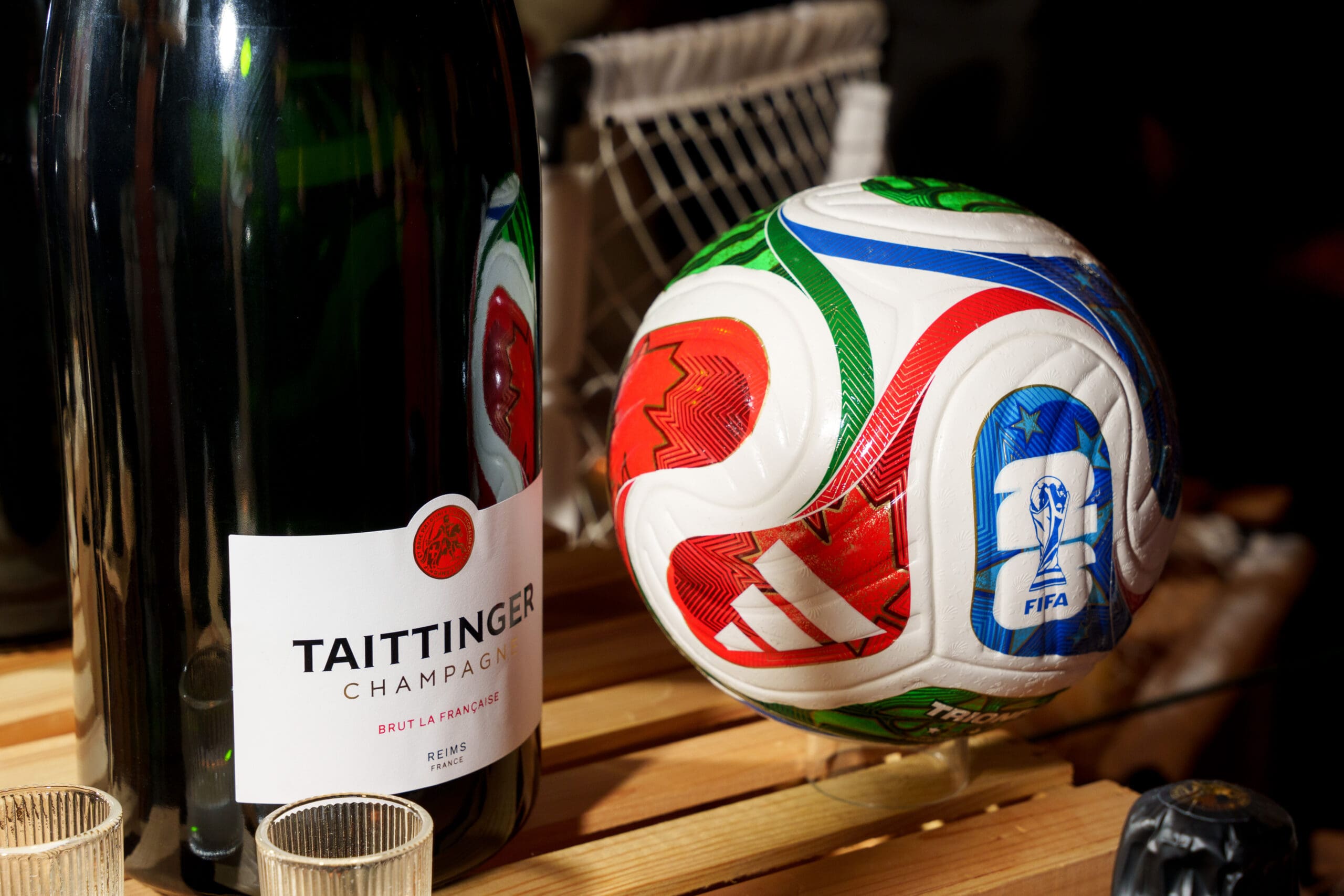
Taittinger Brut la Francaise
This wine has a subtle, pale gold color with fine, persistent bubbles. It is delicate, with aromas of peach, white flowers, vanilla pod, and brioche on the nose and flavors of fresh fruit and honey on the palate.

Taittinger Comtes de Champagne Blanc des Blancs
A powerful, refined, expressive and complex Champagne, with notes of citrus fruits, lime blossoms and caramelized grapefruit. The long, rich ending reveals sweet licorice aromas.